
Biomechanical Assessment in Sydney
Your Sydney Assessment
A biomechanical assessment in Sydney is a detailed examination of how your feet and lower limbs move. Our podiatrists at Great Feets Redfern use this assessment to find the root cause of your pain or injury.
Rather than treating symptoms alone, we look at the full picture. We examine your joint movement, muscle strength, posture, and the way you walk. Together, these give us a clear diagnosis and a treatment plan that is specific to you.
Poor foot mechanics can affect your whole body. Misalignment at the foot places extra stress on the ankle, knee, hip, and lower back. Because of this, addressing biomechanical problems early leads to much better long-term outcomes.
A biomechanical assessment also helps us determine whether orthotics would benefit you, alongside other treatments such as footwear changes and targeted exercises.
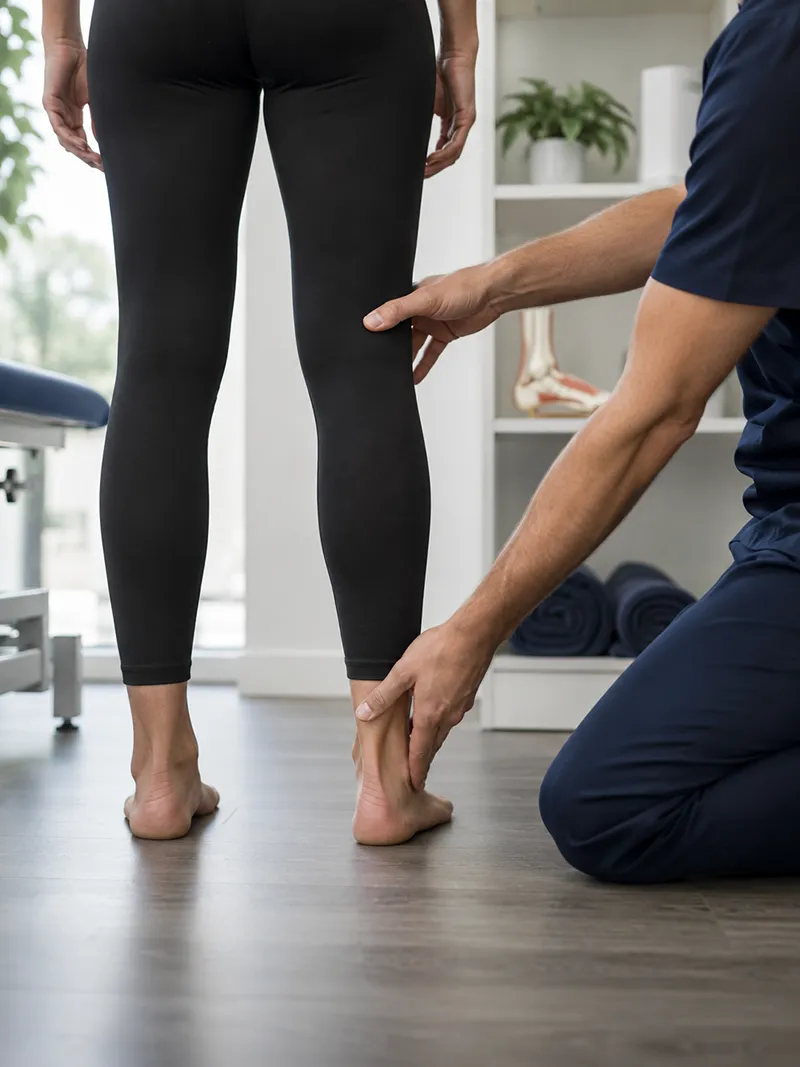
What We Examine
What does a biomechanical assessment involve?
Our Sydney biomechanical assessment is thorough. We look at several areas of your lower limb function. Each component gives us important information that helps us build an accurate picture of how your body is moving.
Gait Analysis
We watch how you walk and, where relevant, how you run. We look at your step pattern, timing, and foot contact. This reveals how your body distributes load during movement.
Joint Range of Motion
We measure the range of movement at each joint in your foot, ankle, knee, and hip. Restrictions in joint movement are a common cause of pain and injury.
Muscle Strength Testing
We test the strength of key muscle groups in your lower limb. Weakness or imbalance in these muscles often contributes to pain and increases the risk of injury.
Foot Posture Assessment
We assess how your foot sits and moves under load. Flat feet, high arches, and abnormal foot posture are all identified and factored into your treatment plan.
Footwear Assessment
We examine your current footwear, including wear patterns on the sole. This gives us additional information about how your foot functions during daily activity.
Posture and Alignment
We assess your overall standing posture from the ground up. Alignment problems at the foot often show up as pain higher in the body, including the lower back.

Your Visit
What to expect at your biomechanical assessment
A biomechanical assessment at Great Feets Redfern takes around 45 to 60 minutes. Here is a breakdown of what happens during your appointment.
01
Your History
We start by asking about your symptoms, how long you have had them, and what makes them better or worse. We also ask about your activity level, footwear, and any previous treatment you have received.
02
Clinical Examination
We test your joint flexibility, muscle strength, and foot posture. We also examine how your feet and legs look when you are standing. This gives us a detailed picture of your structure and alignment.
03
Gait Assessment
We observe how you walk and, where relevant, how you run. We look at each phase of your gait cycle in detail. This reveals how your feet and legs function under normal load.
04
Your Treatment Plan
We explain our findings clearly and outline a treatment plan tailored to your needs. This may include orthotics, exercises, footwear advice, or a combination of approaches. You leave knowing exactly what to do next.
A biomechanical assessment is a detailed examination of how your feet, ankles, and lower limbs move and function. Your podiatrist will assess your joints, muscles, posture, and gait. The goal is to find the root cause of your pain or injury, so treatment can target the real problem rather than just the symptoms.
A general podiatry appointment focuses on everyday foot care, such as nail and skin treatment. A biomechanical assessment is more in-depth. It looks at movement, structure, and alignment throughout the lower limb. Most patients book a biomechanical assessment when they have pain that general treatment has not resolved.
A full biomechanical assessment at our Sydney clinic typically takes 45 to 60 minutes. This allows time for a thorough examination, gait analysis, and a full discussion of your findings. Follow-up appointments are usually shorter.
We recommend wearing or bringing shorts, as we need to see your lower legs during the assessment. Also bring your regular everyday shoes, and any sports or work footwear that is relevant to your problem. If you currently use orthotics, bring those along as well.
Not necessarily. Orthotics are one possible outcome, but they are not prescribed automatically. Depending on your findings, your podiatrist may recommend exercises, footwear changes, or other therapies instead. We only recommend orthotics when they are genuinely likely to help your specific condition.
Yes. Biomechanical issues are a very common cause of running injuries. We assess your running gait and identify any abnormalities in your foot strike, joint movement, or muscle function. From this, we can recommend specific changes to help you run with less pain and reduce your risk of further injury.
No. You can book directly with Great Feets Podiatry without a GP referral. If your GP has referred you under a GP Chronic Condition Management Plan, you may be eligible for a Medicare rebate. Please bring your referral letter if this applies to you.
We are at Shop 10, 161 Redfern Street, Redfern NSW 2016, directly opposite Redfern Station. Enter via Gibbons Street. We are easily accessible from Surry Hills, Waterloo, Newtown, Alexandria, and across Sydney’s Inner West.
Got Questions?
Common questions about biomechanical assessments in Sydney
Below are the questions we hear most often from new patients. If something specific is not covered here, give us a call and we will walk you through it.
Ready to put your best foot forward?
A genuine, individual approach to every client, because your feet are unique and so is your care.